A smart jumpsuit tracks infants’ motor development
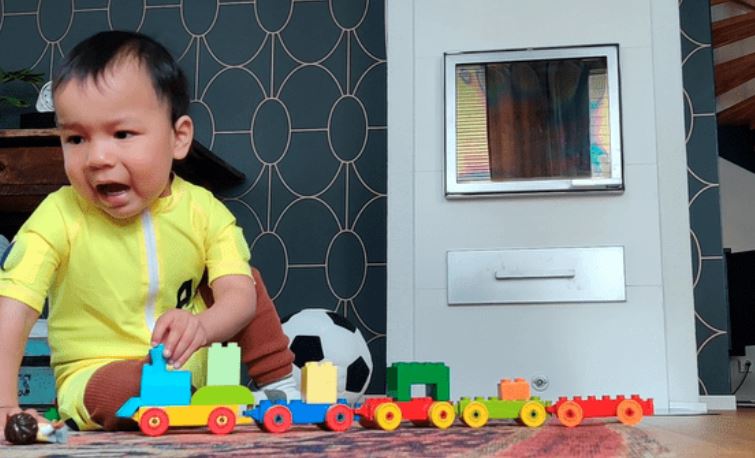
New wearable technology creates new possibilities for assessing the neurological development of young children. Early motor assessment is essential for supporting the early detection of neurodevelopmental problems and their therapeutic interventions.
A Finnish research group at the BABA Center, Helsinki Children’s Hospital, has developed a novel wearable for infants for the reliable assessment of motor abilities during early development. The smart jumpsuit MAIJU (Motor Assessment of Infants with a Jumpsuit) is a wearable medical device equipped with multiple movement sensors, which assist in assessing and predicting children’s neurological development. … [read more]
Link found between time perception, risk for developmental coordination disorder
Motor development in infants refers to the progressive, orderly acquisition of skills involving the use of muscles and the ability to coordinate movement. It is a foundational aspect of a baby’s overall growth, serving as a visible window into the developing nervous system and providing the means for infants to explore and interact with their environment . This developmental trajectory is not random; it follows a predictable, sequential pattern governed by two fundamental principles. The first is the cephalocaudal trend, which describes how control develops from the head downward—babies gain control over their neck and head long before they can control their legs. The second is the proximodistal trend, which describes how control spreads from the center of the body outward—they gain command over their torso and shoulders before they can manipulate objects with their fingers . This entire process is dynamic, emerging from the complex interplay of the infant’s genetic blueprint, the state of their growing bones and muscles, and the rich sensory feedback they receive from their environment .
Gross motor skills are the large, sweeping movements that involve the whole body, and they are what most people picture when thinking of a baby’s development. These skills encompass the major milestones like lifting the head, rolling over, sitting up unsupported, crawling, and eventually walking . The timeline for these milestones is broad and varies significantly from child to child, but the sequence is remarkably consistent . For example, a typical infant learns to raise their head and chest while on their tummy around 2 to 4 months, sits without support around 6 to 8 months, begins to crawl between 7 and 10 months, and often takes their first independent steps around 12 months . The achievement of walking is a monumental milestone, representing a massive leap in independence and cognitive exploration, as it frees the hands for manipulating objects and opens up a whole new world of spatial awareness . These gross motor skills are heavily reliant on postural control, which is the ability to maintain a stable, upright position against gravity—a prerequisite for any controlled movement .
In contrast, fine motor skills involve the coordination of small muscle movements, primarily in the hands and fingers, working in conjunction with the eyes. These skills are crucial for the increasingly precise interactions an infant has with their world, enabling them to grasp, hold, manipulate, and explore objects . Early on, a newborn’s grasping is reflexive, but by around 4 months, this reflex gives way to voluntary reaching and swiping . At 6 months, babies typically develop a ulnar grasp, where they use their whole hand to scoop up an object like a crude rake . Over time, this progresses to a more sophisticated pincer grasp around 9 to 12 months, where they use the tips of their thumb and index finger to pick up tiny objects like cereal pieces . These fine motor achievements are not just about the hands; they are deeply connected to cognitive development, as the act of picking up, turning over, and mouthing an object is a primary way that infants learn about its properties—its texture, weight, and shape .
It is critical to understand that motor development is not a race, and the timing of milestones exists within a wide range of normality. While the sequence of development is predictable, the rate at which an infant progresses is influenced by a variety of factors, including their individual temperament, body size, muscle tone, and the opportunities they have for practice . For instance, a baby who is often placed on their tummy will likely develop upper body strength sooner than one who is not. However, parents and caregivers should be aware of “red flags”—significant delays, such as not being able to sit unsupported by 9 months or not walking by 18 months—which warrant a discussion with a pediatrician . Ultimately, motor development is the engine of infant learning; every new movement skill, from a first reach to a wobbly step, opens up new possibilities for cognitive, social, and emotional growth, demonstrating that the body and mind develop in perfect, interdependent synchrony .